

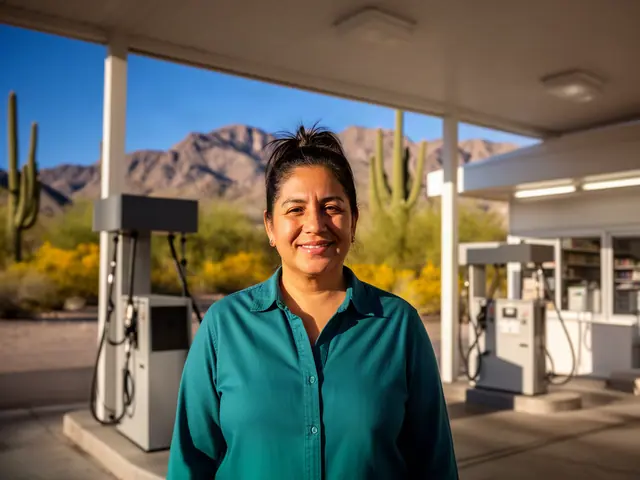
Prairiebank Loans, a small-business funding service in Florence, AZ, explains how buyers in Pinal County, AZ get a loan to buy a gas station or convenience store: the seller records partners read, why fuel and in-store sales are judged separately, the supply agreement, equipment and tank records, and how inventory is handled at closing.
Stations in Pinal County, AZ by the numbers
Pinal County, AZ had 71 gasoline station employer establishments in 2023, with 1,215 employees and $38.8 million in annual payroll (County Business Patterns 2023). Only 8.5% had fewer than five employees, so more than nine in ten stations here had five or more employees. Four of the stations had a ZIP 85132 address (ZIP Code Business Patterns 2023). Another 16 county employers were convenience stores with no pumps (CBP 2023, NAICS 445120).
That staffing matters for a buyer. Payroll is one of the biggest costs you inherit, and the seller's payroll records belong in your file.
How to get a loan to buy a gas station: the short version
- Get the seller's last two or three years of tax returns and profit and loss statements.
- Separate fuel gallons and fuel margin from in-store sales.
- Read the fuel supply agreement: its term, brand obligations and whether it can be assigned to you.
- List the equipment and who owns it: dispensers, tanks, coolers, POS.
- Review the lease or the land arrangement.
- Agree how inventory will be counted and paid for at closing.
- Then size the funding request.
A purchase is often funded with a term loan, sometimes paired with inventory financing for the store stock at closing.
Gas station financing requirements partners look at
Partners do not publish fixed requirements, but a station file is usually read in this order: is in-store revenue steady and documented; does the fuel side at least cover its own costs; can the supply agreement transfer; how old is the equipment; and how long is the lease? A buyer's own experience running retail or a station is a plus.
Seller numbers that cannot be tied to bank deposits or tax returns slow a request down. Ask early for POS reports and bank statements that match the returns.
Tanks, equipment and environmental questions
Underground tanks, dispensers and monitoring equipment carry compliance and environmental obligations that a buyer can inherit. These belong with an attorney and an environmental professional, not a funding conversation, and a partner will expect them to be settled before closing.
How to buy a convenience store business without fuel
Without fuel, the file is simpler: seller financials, sales by category, the lease, the equipment list (coolers, shelving, POS) and the inventory at closing. Tobacco and lottery sales add volume but carry thin margins, so look at gross profit, not just sales.
Real estate is a separate conversation
If the land and building come with the business, that part usually needs a commercial mortgage from a bank. Prairiebank does not arrange commercial real estate purchase loans; it can help with the business, equipment and inventory side of the deal.
A note on transition and staffing
Because more than nine in ten Pinal County stations have five or more employees, a buyer usually inherits a staff along with the pumps. Ask the seller who the key people are, such as the manager who handles fuel orders and the clerk who knows the lottery reconciliation, and plan how to keep them. A smooth first month protects in-store sales, and in-store sales are something partners look at closely.
The first week after closing
A station keeps selling fuel and snacks the morning after the sale, so the accounts that run it have to move to the buyer on schedule. List them before closing and check them off:
- Card processor and point-of-sale accounts in the buyer's name, with deposits going to the new business bank account.
- Fuel supply and store vendor accounts, with the credit terms each one will give a new owner.
- Utilities, the lottery and tobacco accounts, and any equipment service contracts.
- Insurance in force from the closing date.
Gaps here show up quickly as missed deliveries or deposits landing in the wrong account, which is the kind of noise a partner then has to read around.
Where to go next
The gas station and convenience store page covers remodels and equipment upgrades. The term loan page explains amortization and prepayment, and the Florence, AZ page has the wider county figures. Three more Pinal County articles, on trades, landscaping and supplier terms, are on the Prairiebank blog.
By Prairiebank Loans · Updated